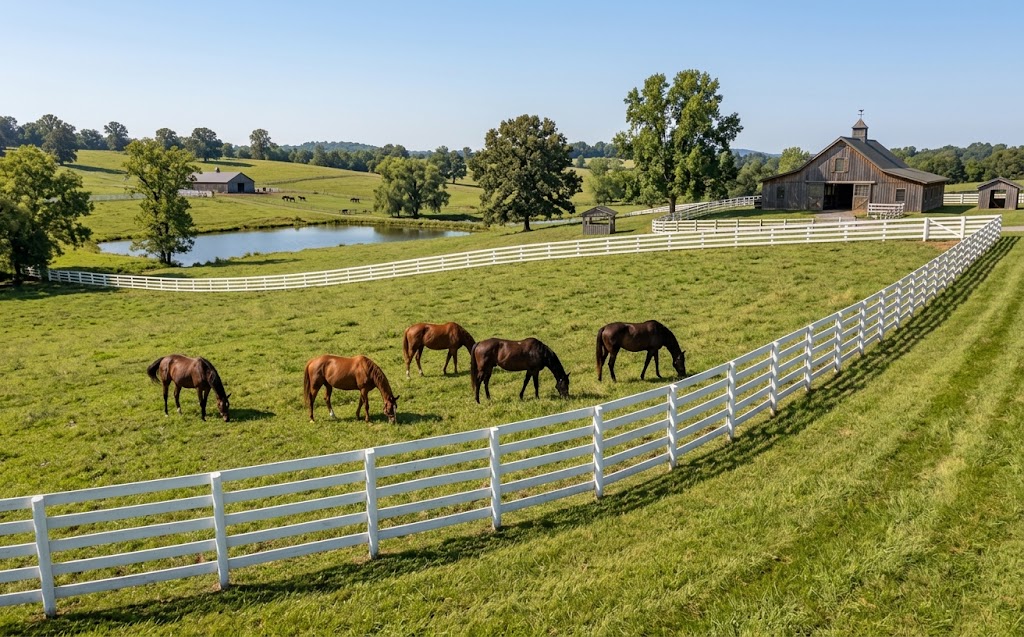
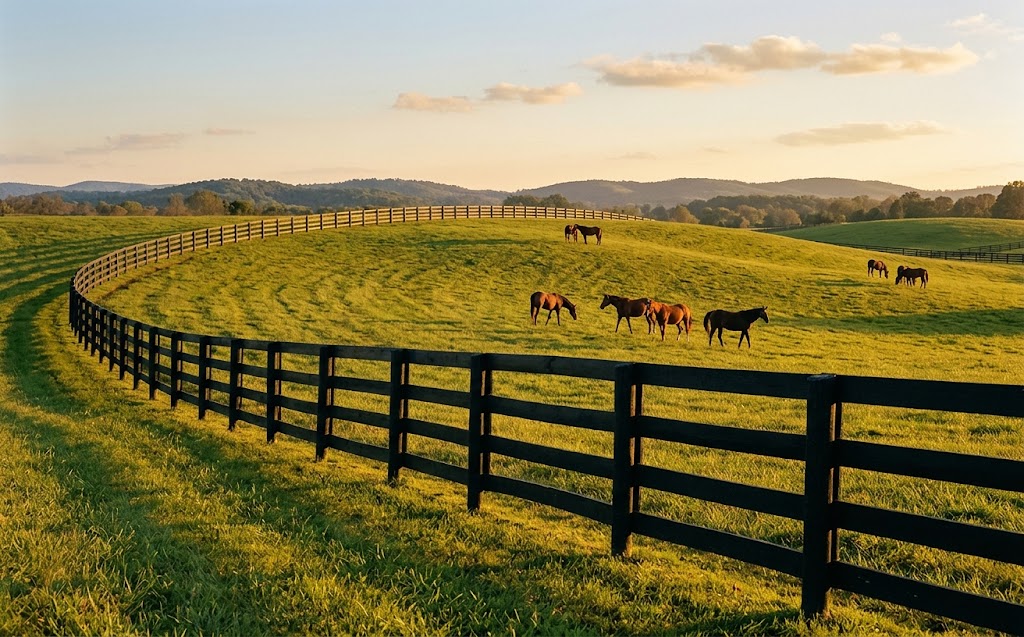
I get this question almost as often as what's my farm worth — usually from someone who's fallen in love with a pretty piece of Bluegrass acreage and is trying to figure out if it's actually enough acreage. It's one of the first things to nail down before you start touring farms, because the wrong number here can mean falling for a property that can't actually support the horses you want to keep. If you're just getting started, my guide to buying a horse farm in Central Kentucky is a good place to begin — this post picks up on one piece of that puzzle in more detail.
The Short Answer
According to University of Kentucky Cooperative Extension guidance, a mature horse on average requires 2 to 3 acres of well-managed pasture to meet most of its nutritional needs through the growing season. That's the number I lean on with clients here in Fayette, Woodford, Bourbon, and Scott Counties, where the pasture management (and the soil under it) tends to be better than the national average.
So if you're picturing three horses, you're generally looking at 6 to 9 acres of usable, managed pasture — not counting the footprint for a barn, riding arena, or run-in sheds.
Why the Number Moves Around
That 2–3 acre figure isn't a hard rule — it shifts based on how the land is managed:
- Rotational grazing (moving horses between two or more pastures to let grass rest) can bring the requirement down closer to 1 acre per horse on excellent, dense sod
- Continuous grazing on a single pasture typically needs more room — sometimes up to 5 acres per horse — to avoid overgrazing and bare patches
- Soil and forage quality matter as much as raw acreage. A well-fertilized, well-drained pasture supports more horses per acre than a neglected one
This is exactly why two farms listed at the same acreage can support very different numbers of horses — the condition of the pasture is doing a lot of the work. It's also part of why farm valuations can vary so much between two properties that look similar on paper.
What This Means When You're House-Hunting
When you're searching listings, "10 acres" doesn't automatically mean "10 acres of pasture." Ask about:
- How much of the acreage is actually cleared, fenced pasture vs. wooded, sloped, or otherwise unusable land
- Whether the pastures are already divided for rotational grazing, or if that's fencing you'd need to add
- Water access in each pasture — hauling water to a back field gets old fast
- Existing barn, run-in shed, or sacrifice-area (a smaller, hardened turnout area for winter or wet months) setup
If the land can't support pasture year-round — and around here, winter pasture is rarely enough on its own — you'll also want to factor in hay costs and storage into your budget from day one. My buyer's guide covers the broader financial planning side of this if you want the fuller picture.
A Few County Notes
If you're looking specifically for horse-suitable land, Fayette, Woodford, Bourbon, and Scott Counties are where most of the well-established farms and pasture infrastructure already exist — which can save you money and headaches versus building rotational grazing systems from scratch on raw land further out. If Paris or Versailles are on your radar, both sit right in that established horse-country footprint.
Let's Find the Right Acreage for Your Herd
Every horse operation is different — a couple of trail horses and a breeding or training operation need very different setups. If you're farm-shopping in Central Kentucky, I'd love to walk the numbers with you and make sure whatever you fall in love with can actually support what you're planning to do with it. Give me a call or reach out at (502) 639-9223.
More farm guides: Central Kentucky Farm & Horse Property