
I get this call more often than you’d think: someone falls in love with a rolling piece of Bluegrass acreage, pictures their horses grazing under an oak tree, and calls me before they’ve thought through a single one of the details that actually make a farm work. I love that call. Farms are one of my favorite things to sell in Central Kentucky, and first-time farm buyers are exactly who this post is for.
Buying a horse farm isn’t buying a house with more yard. The land itself, the zoning, the fencing, the water, even the financing all work differently than a residential purchase. Here’s what I walk every first-time farm buyer through before we ever write an offer.
Why Central Kentucky’s Soil Actually Matters
You’ve probably heard that Central Kentucky’s Inner Bluegrass region is the horse capital of the world, but the reason is worth knowing before you buy. Underneath the rolling pasture is a layer of phosphatic limestone that feeds the soil high levels of calcium, which in turn produces the dense, mineral-rich grass that built this region’s reputation for raising sound, strong horses since the 1800s.¹ That’s not just history — it’s why land in Lexington, Versailles, Paris, and Georgetown commands a premium, and why the pasture quality on a property you’re considering is worth evaluating just as closely as the house.
Acreage, Zoning, and What “Agricultural” Really Means
Not every pretty piece of land is set up to function as a farm, and zoning is the first thing I check before showing a property to a farm buyer. (If you’re still working out how many acres you actually need, start with my guide: How Much Land Does a Horse Actually Need?)
In Fayette County’s Agricultural Rural (A-R) zone, the minimum lot size is 40 acres outside the Urban Service Area, and the Rural Service Area Land Management Plan governs what you can and can’t do with rural land county-wide — including agritourism activities, accessory structures, and horse operations.² If you’re hoping to board horses commercially, host lessons, or run any kind of business from the farm, we confirm what the zoning actually allows before you fall in love with the property.
Separately, there’s the agricultural property tax exemption, which is a different thing entirely from zoning. Kentucky law defines agricultural land as at least 10 contiguous acres used for the production of livestock, and land that qualifies is assessed at its agricultural use value rather than fair market value — often a meaningful tax difference.³ Whether a horse operation qualifies can depend on how it’s structured, so this is one I always recommend confirming directly with the county Property Valuation Administrator (PVA) office before you count on the savings.
Fencing, Water, and the Infrastructure That Actually Costs Money
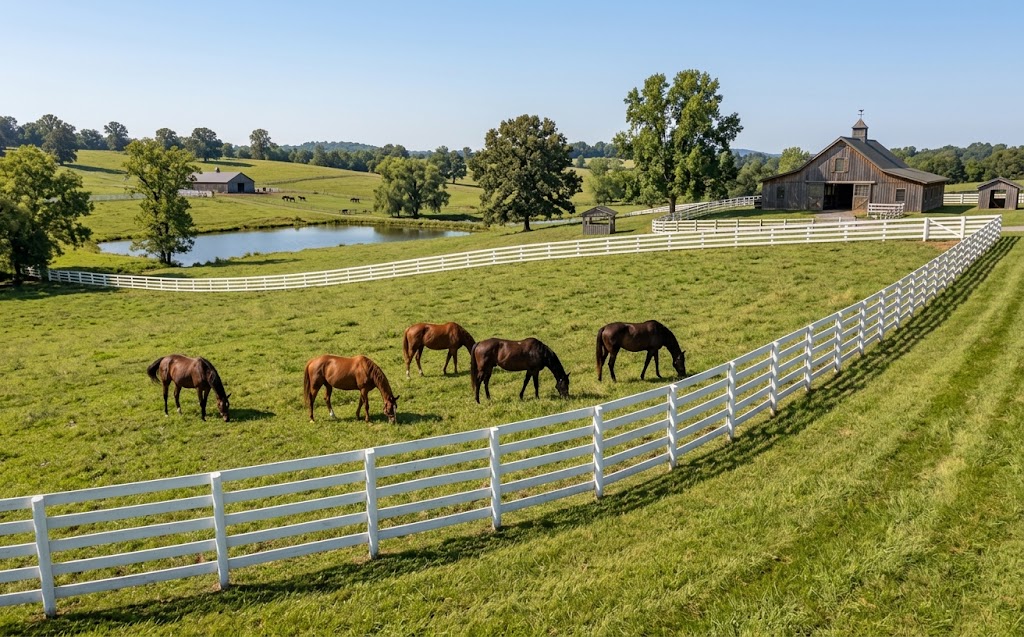
The house is rarely where a farm budget gets surprised — the infrastructure is. For a full checklist, see Fencing, Water, Zoning: What to Check Before Buying Kentucky Farmland. No-climb wire fencing is a lower-cost, lower-maintenance alternative that many working farms use instead, and it’s still a safe option for horses because the mesh is tight enough that a hoof can’t get through.⁴ When I walk a farm with you, we’re looking at fence condition and type as closely as we look at the barn.
Water matters just as much. Ask about the well capacity, whether there’s a pond, and how pastures are cross-fenced for rotational grazing. These are the details that determine whether a property is ready to bring horses home to, or whether you’re budgeting for infrastructure on top of the purchase price.
Financing a Farm Isn’t Like Financing a House
If you’re planning to run the property as a working farm operation, it’s worth knowing that the USDA’s Farm Service Agency offers Farm Ownership Loans, including a Beginning Farmer program with a down payment as low as 5%.⁵ These programs do have eligibility requirements around farm operating experience, so they tend to fit buyers building an agricultural business rather than a purely residential horse property — but for the right buyer, it’s a resource worth exploring early, before you’re deep into a search.
For most buyers purchasing a horse property as a home with acreage, we’re usually looking at conventional or jumbo financing, and lenders will want to know about outbuildings, acreage, and whether any part of the property generates income. I always recommend getting pre-qualified with a lender who has specifically financed farm properties before — it makes a real difference when we’re negotiating.
Know the Liability Law Before You Board Your First Horse
Before you bring your first horse home, know that Kentucky law (KRS Chapter 247) limits liability for farm animal activities, but only if warning signage meeting the statute’s specific language is posted.⁶ If you plan to board horses for others, offer lessons, or host any kind of farm animal activity, this is a conversation to have with your insurance agent and, ideally, an attorney, before you open the gate to your first client.
Why Buyers Keep Choosing Central Kentucky
Kentucky’s equine industry isn’t a niche interest here — it’s a $6.5 billion annual economic driver supporting over 60,000 jobs statewide, according to a University of Kentucky economic impact study.⁷ That’s the backdrop for why farm properties in this region hold their appeal: you’re not just buying land, you’re buying into an industry, a community, and a way of life that’s been built here for two centuries.
If you’re a first-time farm buyer, my advice is simple: don’t go look at farms alone. Zoning, water rights, fencing condition, and financing all need a second set of eyes before you fall for the view. I’ve helped buyers navigate exactly this kind of purchase across Lexington, Nicholasville, Paris, Versailles, and the surrounding Bluegrass communities, and I’d love to help you find the right one.
Already own land and thinking about selling first? Read What’s My Kentucky Farm Really Worth? Then reach out for a confidential consultation, and let’s talk about what farm ownership in Central Kentucky could look like for you.
This post is intended as general educational information, not legal, tax, or financial advice. Zoning classifications, agricultural exemptions, and loan eligibility should always be confirmed with the relevant county office, tax professional, or lender before you rely on them.
More farm guides: Central Kentucky Farm & Horse Property